Lecture 1 provides an introduction to the course. It reviews the course
aims and objectives, intended learning outcomes, and timetable; and it
outlines the means by which the course will be assessed. This lecture
is comprised of one part.

00:00:00.000
Welcome to advanced systems programming.
00:00:03.200
For those who don't know me, my name is Colin Perkins,
00:00:05.933
and I'll be giving the lectures for this course.
00:00:09.133
in this first lecture, I’ll introduce the course
00:00:11.600
and talk about how the material will be structured.

00:00:16.433
As I said, I'm Colin Perkins
00:00:18.066
and I'll be giving the lectures for this course.
00:00:21.133
I'll be joined by Lito Michala,
00:00:22.766
who'll be running the labs and the course work
00:00:25.633
Our contact details are on the slide.
00:00:28.933
If you have any questions about the material
00:00:30.733
covered in the course
00:00:31.766
we're happy to answer them via email.
00:00:34.433
We also have office hours and discussion sessions
00:00:36.700
throughout the course.
00:00:38.233
You can find my office in Lilybank Gardens,
00:00:40.700
and Lito is in the Sir Alwyn Williams body.
00:00:44.266
The lecture slides, recordings, transcripts, lab exercises
00:00:49.000
and other course materials can be found on Moodle.

00:00:54.266
So what's this course about?
00:00:57.333
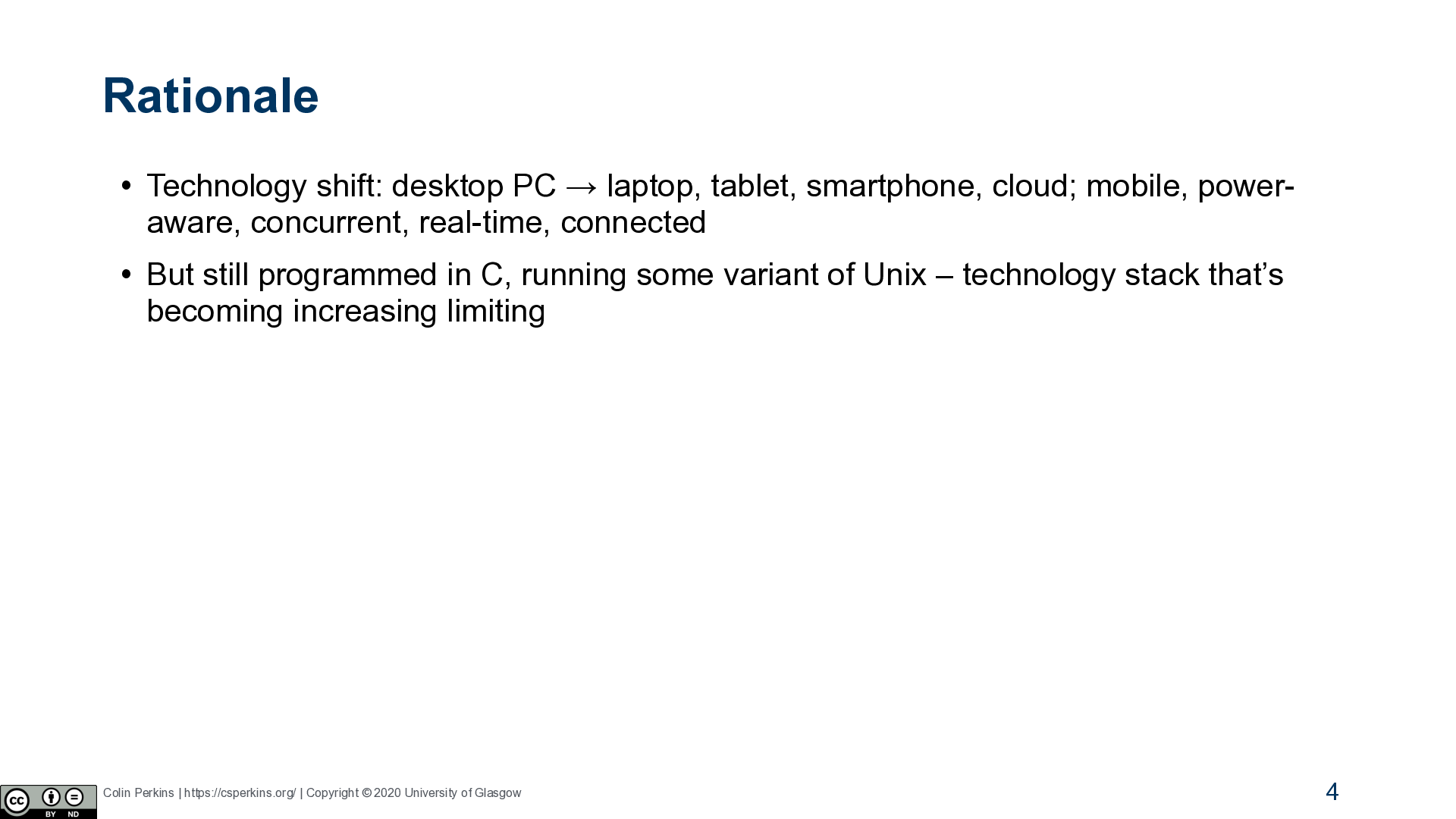
Well, over the last 10 to 15 years
00:00:59.800
we've seen a shift in the technology landscape.
00:01:03.233
We've gone from a world dominated by
00:01:05.166
desktop PCs running windows.
00:01:07.566
with a relatively small number of servers,
00:01:09.666
often located on-site,
00:01:11.366
to support those PCs,
00:01:13.633
to a world dominated by smartphones and cloud computing
00:01:18.566
Devices are now much more likely to be mobile
00:01:21.133
and battery-powered,
00:01:22.633
and connected to a network that lets them offload
00:01:24.666
computation and data
00:01:26.000
to remote cloud computing resources
00:01:28.433
in dedicated data centers.
00:01:31.933
This changes the way we use those devices,
00:01:34.600
and the type of applications we use.
00:01:38.300
We're also increasingly using real-time applications,
00:01:41.933
like telephony, video conferencing, or streaming video,
00:01:46.133
on our smartphones, tablets,
00:01:47.900
and other general-purpose computing devices.
00:01:52.400
And there are also increasing numbers of servers.
00:01:55.800
These are not battery-powered or mobile,
00:01:58.333
but they are also increasingly power-aware,
00:02:01.100
as data center operators strive to
00:02:02.866
reduce the electricity and air conditioning costs
00:02:05.500
of operating their services
00:02:07.833
and to reduce their environmental impact.
00:02:12.000
And the devices we use are increasingly concurrent.
00:02:15.566
In part because the data center
00:02:17.466
is a natural home for concurrency,
00:02:19.666
running millions of instances of the same service
00:02:22.133
to meet the needs of different users.
00:02:24.866
But it's also, in part, because the need to control
00:02:27.066
the power consumption has pushed mobile CPUs
00:02:29.933
in the direction of multi-core support.
00:02:36.166
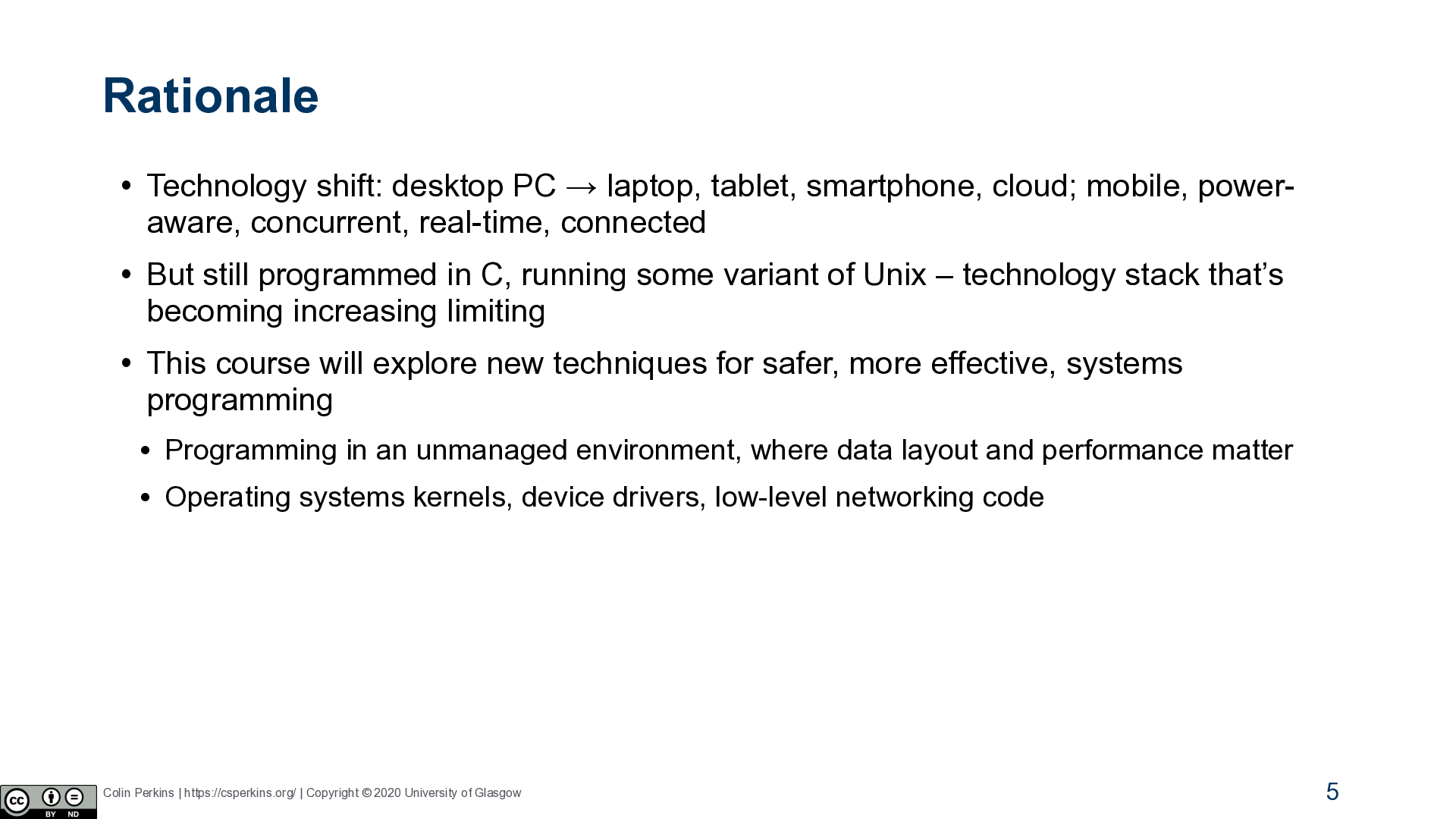
Despite these massive shifts,
00:02:38.200
the underlying operating system,
00:02:39.966
and software stack has changed relatively little.
00:02:44.700
The operating system on my smartphone for example.
00:02:48.233
runs the same underlying software stack
00:02:50.400
as the desktop workstation I used in 1992,
00:02:54.266
30 years ago.
00:02:56.900
It uses the same operating system kernel.
00:02:59.866
It's programmed using the same programming language,
00:03:02.766
and shares many of the same software libraries,
00:03:05.066
APIs, and features.
00:03:08.433
The code has evolved and changed, of course.
00:03:11.133
but the organization, architecture,
00:03:13.333
and underlying approaches
00:03:14.566
to writing the system remain surprisingly similar.
00:03:19.266
This technology and programming model
00:03:21.133
is increasingly limited
00:03:22.700
and increasingly limiting.
00:03:27.833
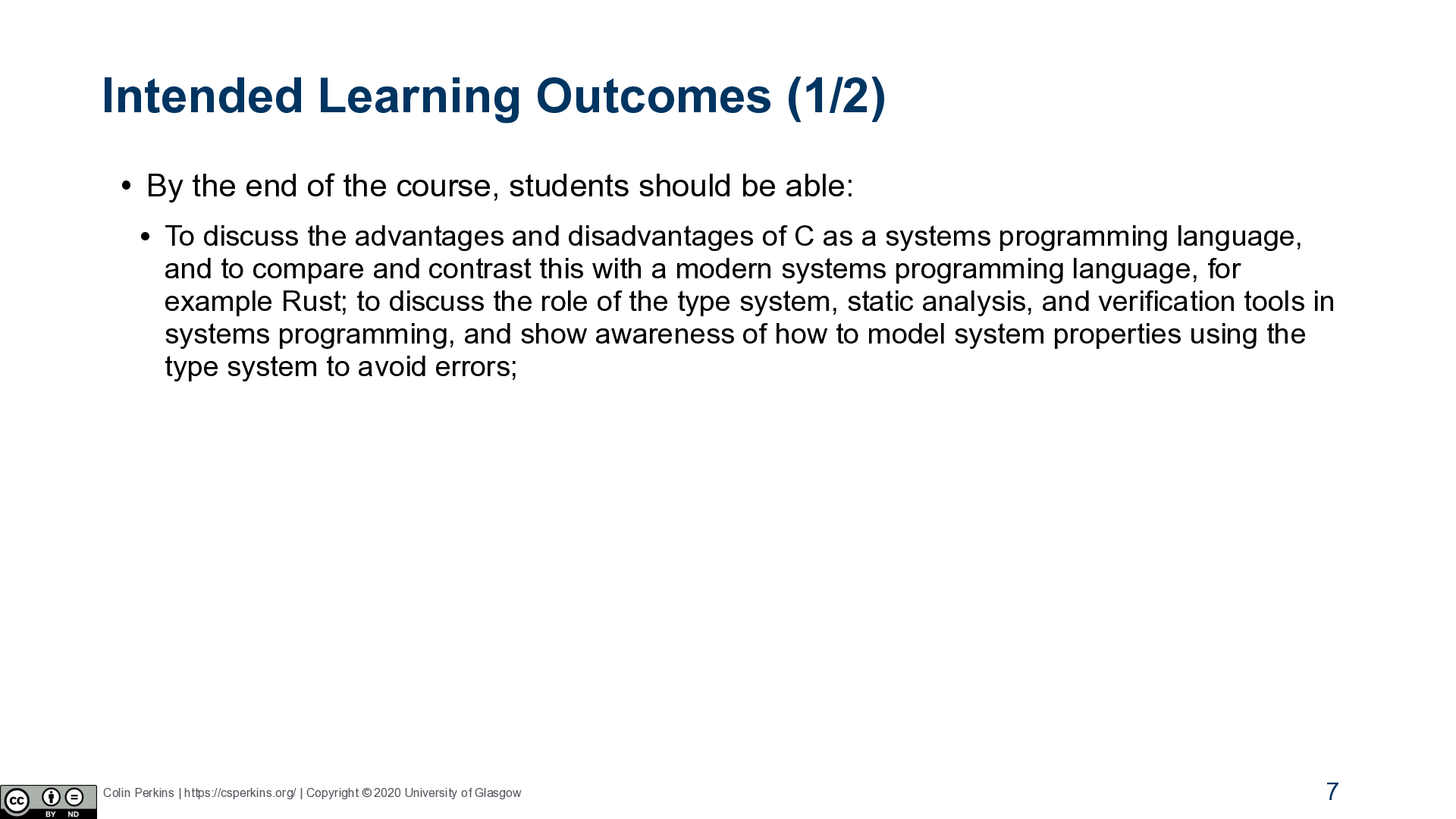
In this course we'll explore some new technologies
00:03:30.600
and approaches that aims to support safer,
00:03:33.033
and more effective, systems programming.
00:03:36.400
We'll talk about advances in programming languages
00:03:38.933
that allow us to retain the advantages
00:03:41.133
of systems programming languages,
00:03:44.166
such as C,
00:03:46.033
in terms of control over data representation
00:03:48.966
and high performance,
00:03:50.900
while being much safer and much easier to program.
00:03:54.600
We'll talk about how operating systems might change
00:03:57.366
to better support writers of device drivers,
00:03:59.966
low-level networking code, and so on.
00:04:02.800
with the goal of improving safety
00:04:04.700
and security of the overall system.

00:04:11.933
The aims of the course
00:04:13.333
are to explore the features
00:04:14.733
of modern programming languages
00:04:16.200
and operating systems
00:04:18.166
that can ease the challenges of systems programming,
00:04:21.133
focusing on type systems and runtime support.
00:04:25.866
We'll review the literature on systems programming
00:04:28.400
and operating systems design,
00:04:30.800
discuss limitations of deployed systems.
00:04:33.733
and consider how systems programming
00:04:36.133
might evolve to address the challenges of
00:04:38.466
supporting modern computing systems.
00:04:42.166
In particular.
00:04:43.466
the course will aim to highlight how
00:04:45.166
modern programming languages
00:04:47.166
and new approaches to software development,
00:04:49.766
can help ensure system correctness and security.
00:04:54.300
Fundamentally, we'll be looking at how systems
00:04:57.033
programming is changing to support new applications
00:04:59.666
and new uses.
00:05:05.333
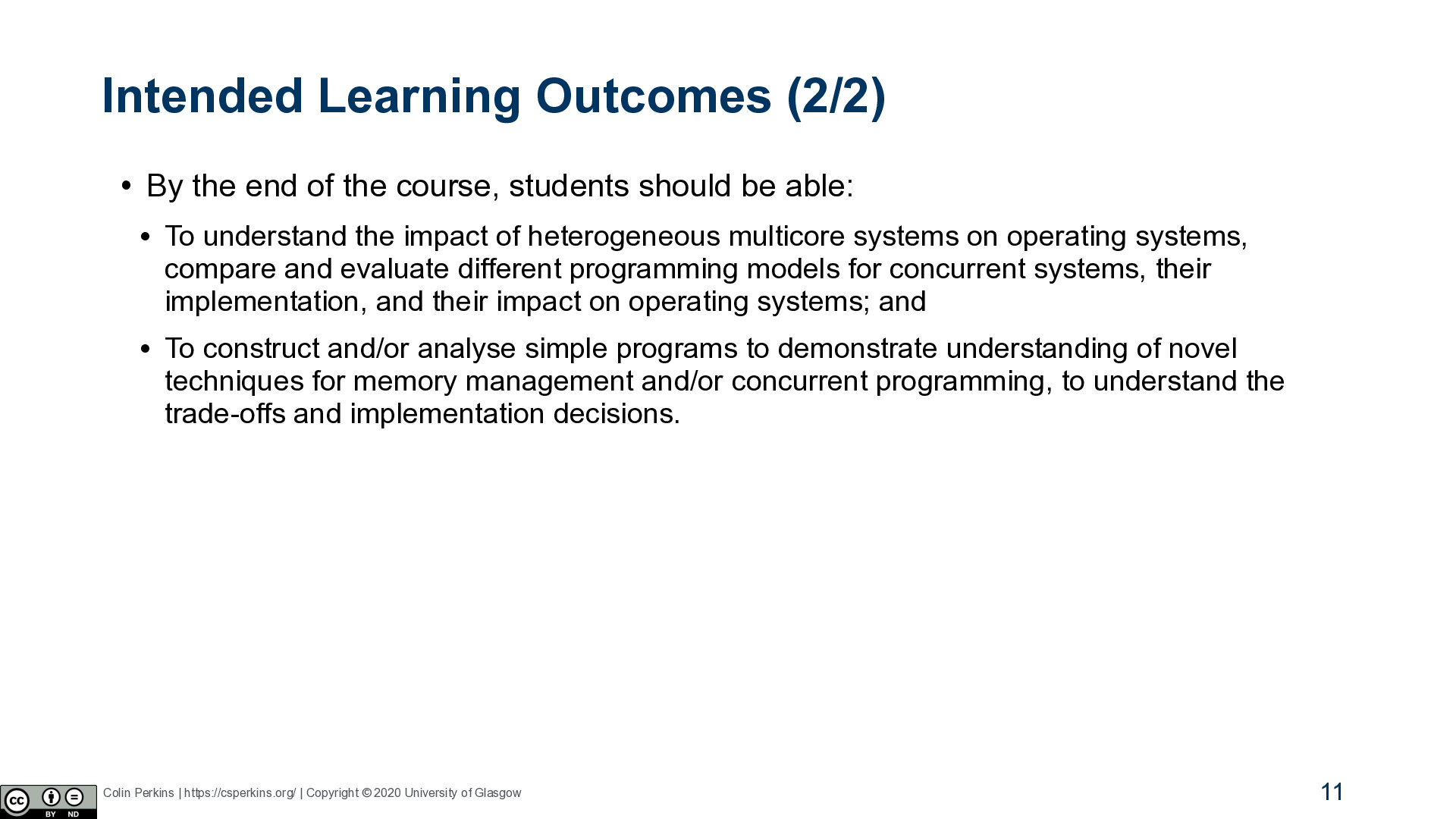
What are the expected learning outcomes?
00:05:09.200
Well, first and most importantly.
00:05:12.100
by the end of the course,
00:05:13.366
you should understand the advantages,
00:05:15.033
and disadvantages,
00:05:16.300
of using C as a system's programming language
00:05:20.733
You should be able to discuss the
00:05:22.066
benefits of using a modern,
00:05:23.700
strongly-typed, systems programming
00:05:25.300
language as an alternative.
00:05:27.933
And you should have an understanding
00:05:29.433
of the concepts behind type-driven development,
00:05:32.100
and the role of the type system
00:05:34.500
in ensuring code in ensuring code correctness.

00:05:41.266
Second, you should have some understanding
00:05:43.933
of the challenges in writing secure systems code
00:05:48.533
In particular, you should understand some of the issues
00:05:51.000
around memory safety
00:05:52.666
and parsing untrusted network inputs.
00:05:56.433
And you should understand why these tasks
00:05:58.500
are difficult in C.

00:06:03.733
Third, you should understand
00:06:05.766
the basics of how garbage collection,
00:06:07.966
reference counting,
00:06:09.233
region-based memory management,
00:06:11.133
and manual memory management work.
00:06:14.266
You should have some idea when it's appropriate
00:06:16.300
to use each approach,
00:06:17.733
and what are the trade-offs between them?

00:06:23.500
You should understand why multicore systems
00:06:25.733
are becoming popular,
00:06:27.600
and the hardware trends which are driving this.
00:06:30.466
And you should have an understanding of
00:06:32.200
different approaches to to concurrent programming,
00:06:35.366
including multi-threading,
00:06:37.233
actor-based systems,
00:06:38.800
concurrent transactions,
00:06:40.200
and coroutines,
00:06:42.266
and what are the different trade-offs
00:06:44.100
and strengths and weaknesses between them?
00:06:49.166
And, finally, you should be able to write simple
00:06:51.133
programs in a modern systems programming
00:06:53.200
language to demonstrate your understanding.
00:06:58.300
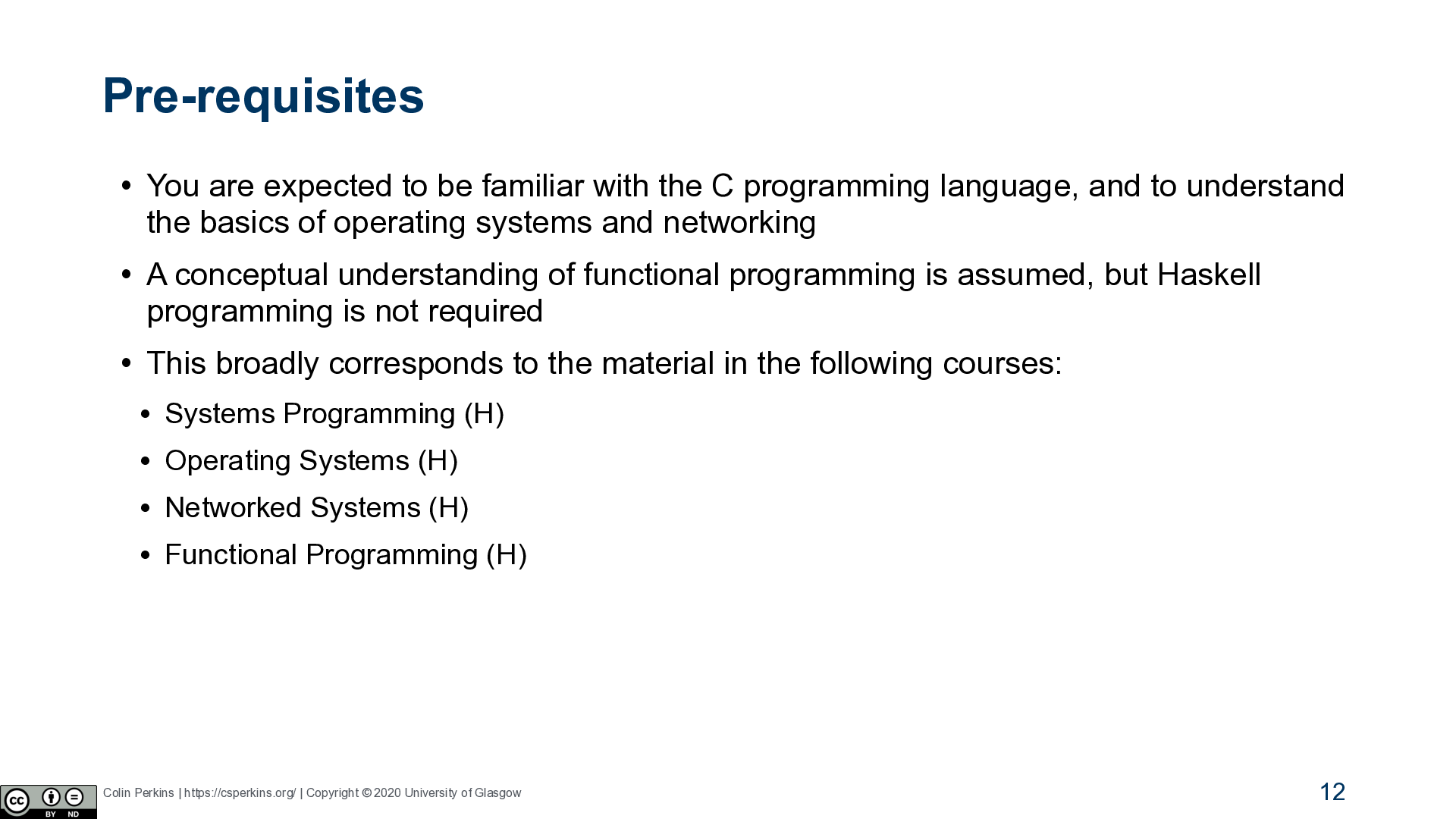
There are a number of prerequisites for this course.
00:07:02.900
Firstly, you're expected to be familiar
00:07:04.933
with the C programming language.
00:07:07.766
You won't need to write any C programs in this course,
00:07:10.733
but you'll need to read and understand C code.
00:07:14.733
One of the aims of this course
00:07:16.400
is to make you aware of the strengths
00:07:18.100
and weaknesses of C as a programming language,
00:07:20.700
and to compare C to other languages.
00:07:23.966
To do this, you need to understand C programming.
00:07:28.300
You need to understand also the basics of
00:07:30.300
operating systems and networking.
00:07:33.266
This is a systems programming course,
00:07:35.600
and operating systems and networks
00:07:37.333
are two of the main areas where systems programming is used.
00:07:42.333
And you need a conceptual understanding of
00:07:44.233
functional programming.
00:07:46.666
You won't need to read more than a few lines of
00:07:48.700
Haskell code.
00:07:50.166
And you certainly won't need to write
00:07:52.100
any Haskell programs.
00:07:54.333
But the ideas behind Haskell are important.
00:07:58.033
We'll be talking a lot about how
00:07:59.566
functional programming concepts,
00:08:01.733
and some of the ideas around modern type systems,
00:08:05.066
both of which were pioneered in Haskell,
00:08:07.666
can be used in more mainstream
00:08:09.266
systems programming tasks.
00:08:13.333
This material broadly matches the systems programming,
00:08:16.266
operating systems,
00:08:17.766
networked systems,
00:08:19.066
and functional programming
00:08:20.333
courses in the Glasgow Computing science degree.
00:08:24.233
You can take this course if you haven't
00:08:25.866
done those other courses,
00:08:27.633
but you might need to do some catching up in your own time.

00:08:33.800
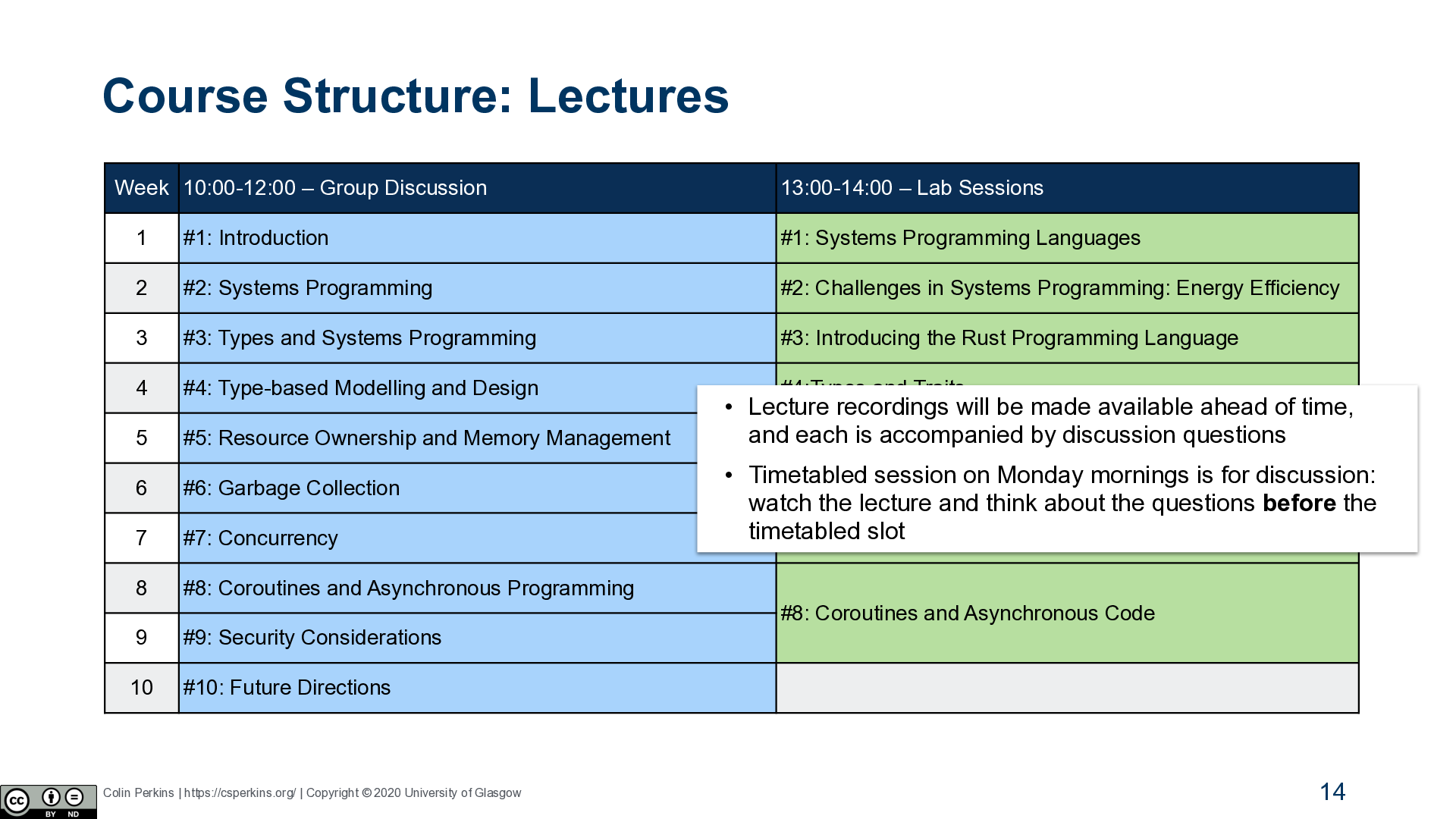
The course is structured as a mix of lectures and labs.
00:08:38.166
The lectures run weekly,
00:08:39.633
with a new topic each week for 10 weeks.
00:08:42.833
Lectures are pre-recorded,
00:08:44.366
and there's a group discussion slot
00:08:46.233
and Q-and-A each week.
00:08:49.333
The labs are also organized weekly,
00:08:52.300
but some exercises are expected to take one week
00:08:54.600
to complete, while others will take two weeks.
00:08:57.833
The labs finish after nine weeks
00:09:02.900
Lecture recordings will be made available ahead of time,
00:09:06.433
and will comprise around an hour's worth of material
00:09:08.866
each week, split into several shorter parts.
00:09:13.400
Each lecture will be accompanied
00:09:14.900
by a set of discussion questions
00:09:17.100
that will be available on moodle and on the course website.
00:09:21.466
These discussion questions are not assessed,
00:09:24.033
and are intended to help you understand the material.
00:09:27.866
The sessions timetabled from
00:09:29.300
10:00 to 12:00 on Monday mornings
00:09:31.166
are intended for a discussion
00:09:32.666
of the lecture material and questions.
00:09:35.766
You must watch the lecture videos,
00:09:37.733
and think about the discussion questions,
00:09:40.366
before the timetabled sessions.
00:09:44.233
This discussion slot
00:09:45.533
is your main opportunity to ask
00:09:47.133
questions about the material,
00:09:49.133
and you should come prepared to talk
00:09:50.766
and discuss the material in this time.
00:09:54.533
The more questions and discussion we have,
00:09:56.800
the more useful it will be.

00:10:01.900
In addition, there are weekly labs
00:10:03.933
during the first 9 weeks of the course.
00:10:07.133
As with the lectures,
00:10:08.533
the lab materials will be made available
00:10:10.500
in advance of the timetabled sessions.
00:10:13.933
You should read the lab sheets,
00:10:15.233
and make a start on the exercises,
00:10:17.333
in your own time before the labs.
00:10:20.866
The timetabled sessions,
00:10:22.666
from 1:00 to 2:00 on Mondays,
00:10:24.666
are for discussion and support of the lab exercises.
00:10:28.766
You should try to solve the lab exercises,
00:10:31.400
and think of questions you might need to ask,
00:10:34.033
before the timetable support slot
00:10:36.733
so we can effectively help you.
00:10:40.500
Many of the labs also have a discussion component.
00:10:44.200
For these labs, read the handouts,
00:10:46.700
think about the questions,
00:10:48.400
and come prepared to discuss the material
00:10:50.633
in small groups during the lab sessions.
00:10:57.500
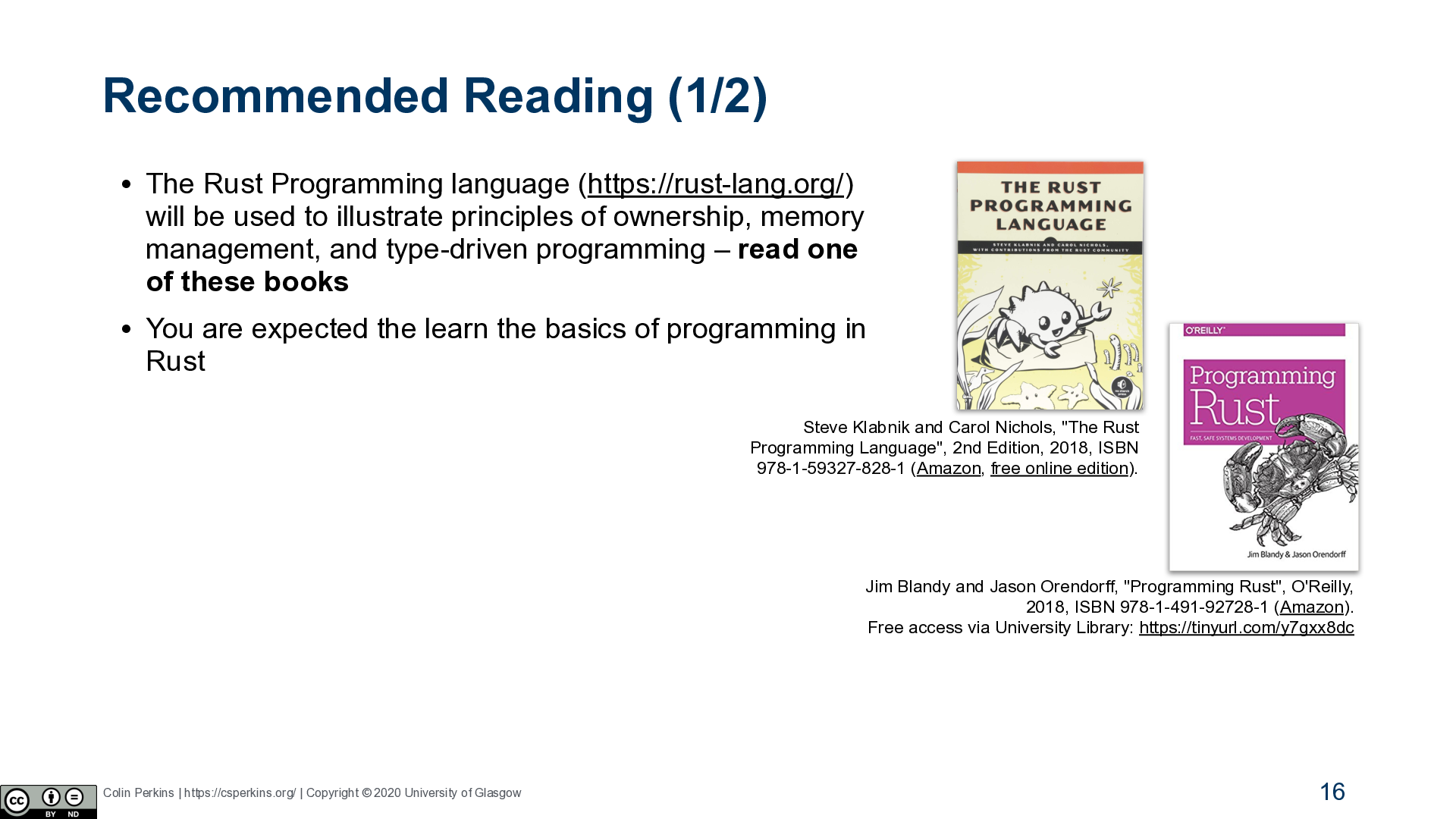
The course will use the Rust
00:10:59.000
programming language to illustrate type-driven
00:11:01.000
design and ownership tracking for systems programming.
00:11:05.400
You're expected to learn the basics of how to program
00:11:07.766
in Rust as part of this course.
00:11:11.666
The two books listed on the slide
00:11:13.700
provide good introductions to Rust
00:11:15.800
to complement the material we'll cover in the lectures.
00:11:20.266
The first book,
00:11:21.333
the Rust Programming Language,
00:11:23.233
by Steve Klabnik and Carol Nichols,
00:11:26.200
is the standard tutorial introduction to Rust.
00:11:30.266
It's available for free on the Rust language website.
00:11:35.000
The second book,
00:11:36.433
Programming Rust,
00:11:37.500
by Jim Blandy and Jason Orendorff,
00:11:40.533
is more expensive if you buy it,
00:11:43.066
but I think it has the better explanations
00:11:44.800
of many of the concepts.
00:11:47.600
The link on the slide
00:11:48.866
offers free access to this book
00:11:50.466
online via the University Library.
00:11:54.366
I strongly recommend that you read one of these books
00:11:57.566
to build on the lectures and lab exercises.

00:12:03.933
In addition to the two books
00:12:05.500
on the Rust programming language,
00:12:07.666
the lectures will also refer to
00:12:09.233
various research papers and blog posts.
00:12:13.533
You're expected to read this material
00:12:17.766
For all the research papers,
00:12:19.600
either a URL
00:12:20.866
or a digital object identifier,
00:12:23.033
a DOI, will be provided.
00:12:26.300
If a DOI is given,
00:12:27.833
go to dx.doi.org
00:12:30.466
enter the DOI, and it will redirect you to the paper.
00:12:36.033
All the papers mentioned in the course
00:12:37.933
are accessible at no cost from the campus network.
00:12:41.100
or via the University's VPN service.
00:12:44.766
In most cases,
00:12:45.833
you should also be able to get access
00:12:47.366
by following the institutional login
00:12:49.433
option on the publishers website,
00:12:51.966
selecting the University of Glasgow,
00:12:53.866
and entering your login details.
00:12:57.566
Under no circumstances should you pay
00:12:59.633
to access any of these papers.
00:13:02.300
If you can't get access for free,
00:13:04.333
ask me and I'll email you
00:13:07.033
and send you a copy.
00:13:09.266
Indeed, don't, pay to access any research papers.
00:13:13.466
It's not perhaps widely known,
00:13:15.266
but authors of research papers don't get paid
00:13:17.700
if you buy a copy of their paper from the publisher.
00:13:21.600
In fact, most research paper authors
00:13:23.633
actually pay to publish their papers.
00:13:27.066
If you want a copy of a research paper,
00:13:29.066
and you can't find it for free online,
00:13:31.266
then email the author and ask.
00:13:33.600
They'll almost always just send you a copy by return.
00:13:38.500
Now, as I said earlier,
00:13:40.100
you're expected to read these papers.
00:13:43.400
When you do,
00:13:44.666
read them to understand the concepts and ideas,
00:13:47.466
not the details.
00:13:49.733
Don't worry If you don't understand
00:13:51.233
everything in the papers,
00:13:52.633
and skip over details
00:13:54.166
and parts you don't understand.
00:13:57.300
You're looking to get a feel for the ideas,
00:13:59.466
not to understand every detail.
00:14:03.300
Some of the ideas mentioned in the papers will be good,
00:14:06.100
some perhaps less so.
00:14:08.800
Some will be interesting, but impractical.
00:14:11.766
And what's impractical today
00:14:13.800
might become important tomorrow
00:14:15.766
due to changes in technology and/or society.
00:14:20.333
The goal of the papers
00:14:21.500
is to help you think more deeply about the subject,
00:14:24.533
not to suggest particular desirable outcomes.
00:14:29.666
If you've not read many research papers before,
00:14:33.233
the "How to read a Research paper" page
00:14:36.066
linked from the slide might be useful.

00:14:42.966
The course follows the usual model of an exam,
00:14:45.766
worth 80% of the marks,
00:14:47.700
with the coursework being worth the remaining 20%.
00:14:51.833
The assessed coursework will comprise
00:14:53.666
two exercises, each with 10% of the marks.
00:14:58.033
The first assessed exercise
00:14:59.966
will be an essay question about memory management.
00:15:03.400
It'll be made available at the start of Lecture 5,
00:15:06.200
and will be due at the start of Lecture 7.
00:15:10.100
The second assessed exercise
00:15:11.666
will be a concurrent programming exercise,
00:15:13.400
using the Rust programming language.
00:15:15.766
It'll be made available at the start of Lecture 7,
00:15:18.900
and will be due at the start of lecture 9.
00:15:22.933
There will also be an exam,
00:15:24.700
worth 80% of the marks for the course,
00:15:27.333
sometime in April or May.
00:15:30.266
Past papers, and a sample exam paper
00:15:32.433
with worked answers, are available on Moodle.
00:15:37.166
The material covered in the lectures and labs is examinable.
00:15:41.200
And, importantly,
00:15:42.566
so to are the ideas
00:15:43.900
discussed in the cited papers and blog posts.
00:15:48.533
The goal is to test your understanding of the concepts,
00:15:52.000
not to test your memory of all of the details.
00:15:55.600
Reading widely,
00:15:56.833
and broadly understanding the material,
00:15:59.000
is important.
00:16:00.900
If you only watch the lectures, and skip the reading,
00:16:04.233
you'll miss important ideas

00:16:09.866
That concludes the introductory remarks.
00:16:13.133
The main lecture content starts in week 2.
00:16:16.333
Please make sure you watch lecture 2,
00:16:18.366
and think about the discussion questions before then,
00:16:21.200
and come prepared to discuss.
00:16:24.233
The labs starting week one.
00:16:26.800
Please review the lab handouts
00:16:28.533
and start on the exercises before then.
00:16:31.066
Thank you.
The discussion session in week 1 will review the course structure,
goals, and logistics. There will be time to ask any questions about
the course, lectures, and labs.